
TL;DR: Concrete leveling using hydrophobic foam is a fast, affordable, and durable solution. It eliminates the need for costly concrete replacement by filling dime-sized holes that blend seamlessly with your existing sidewalk. This clean and eco-friendly method resists water, avoids heavy machinery, and keeps your concrete out of the landfill.
Key Takeaways:
- Polyurethane foam injection is a cost-effective solution for lifting and leveling concrete sidewalks.
- The process is quick, minimally invasive, and environmentally friendly.
- It can prevent further damage, improve safety, and enhance property value.
Table of Contents:
- What is Polyurethane Foam Injection?
- Why Choose Polyurethane for Sidewalk Lifting?
- The Benefits of Polyurethane Foam Injection
- Is Polyurethane Foam Injection Right for You?
- The Polyurethane Foam Injection Process
- Sidewalk Lifting Cost Guide
- DIY vs. Professional Sidewalk Leveling
- Frequently Asked Questions
- Quick Recap
- Conclusion
Walking down your own driveway or sidewalk shouldn’t feel like an obstacle course. Yet, for many homeowners in Indianapolis and beyond, uneven concrete slabs turn a simple stroll into a tripping hazard. Whether it’s caused by soil erosion, tree roots, or just the natural settling of the earth, sunken concrete is an eyesore that can lower property value and create safety liabilities.
If you’re staring at a jagged crack in your walkway, you might be dreading the cost and chaos of tearing it all out to pour new cement. But there is a smarter, faster, and cleaner alternative.
Polyurethane foam injection—often called “polyjacking”—is transforming how we repair residential concrete. It’s a modern solution that fixes the problem at its source without the heavy machinery or week-long cure times of traditional replacement. This guide explores everything you need to know about lifting your sunken sidewalk, from how the technology works to why it’s often the smartest investment for your home.
What is Polyurethane Foam Injection?
Polyurethane foam injection is a concrete lifting method that raises sunken slabs back to their original position using a high-density, expanding polymer.
The concept is surprisingly simple but highly effective. It involves drilling tiny holes (about the size of a dime) into the sunken concrete. Through these ports, a two-part polymer liquid is injected into the soil beneath. Once the liquid combines, a chemical reaction occurs almost instantly. The material expands into a rigid foam, filling the voids caused by soil erosion or settling.
As the foam expands, it exerts upward pressure, gently lifting the heavy concrete slab back to a level position. Once the lift is complete, the foam cures within minutes, creating a permanent, water-resistant base that supports the walkway.
Why Choose Polyurethane for Sidewalk Lifting?
For decades, the standard method for lifting concrete was “mudjacking”—a process that pumps a slurry of cement, sand, and water under the slab. While mudjacking can work, polyurethane foam offers distinct advantages that make it the superior choice for modern homes.
Lightweight Stability
Mudjacking adds significant weight to the soil beneath your concrete—often 100 pounds per cubic foot. If your soil settled because it couldn’t support the weight of the original concrete, adding more heavy material often leads to the same problem recurring later.
Polyurethane foam is incredibly lightweight, weighing only about 2 to 4 pounds per cubic foot. It provides the necessary support without burdening the already compromised soil.
Water Resistance
One of the main enemies of concrete stability is water. Rain and drainage issues wash away soil, creating the voids that cause sinking. Unlike the cement slurry used in mudjacking, polyurethane foam is hydrophobic. It does not wash away, shrink, or degrade when exposed to moisture. In fact, it acts as a barrier, preventing water from eroding the soil beneath your sidewalk in the future.
The Benefits of Polyurethane Foam Injection
Choosing foam injection isn’t just about fixing a crack; it’s about choosing a solution that respects your time, property, and the environment.
Cost-Effectiveness
Tearing out and replacing concrete is expensive and labor-intensive. Polyurethane lifting typically costs 50% to 70% less than the price of a full replacement. You get the same level surface without the heavy price tag.
Speed and Convenience
Concrete replacement requires days of curing time where you can’t use your walkway. In contrast, polyurethane foam cures in about 15 minutes. You can walk on your sidewalk immediately after the crew leaves.
Minimal Disruption
Because the injection holes are so small (roughly 5/8 of an inch), they are barely noticeable once patched. There is no heavy equipment driving over your lawn and no loud jackhammers disturbing the neighborhood.
Environmentally Friendly
The material used is chemically inert once cured, meaning it won’t leach harmful chemicals into the soil or groundwater. Additionally, by saving your existing concrete, you are keeping perfectly good slabs out of landfills.
Is Polyurethane Foam Injection Right for You?
While foam injection is a versatile solution, it is important to know if it applies to your specific situation. This method is ideal for:
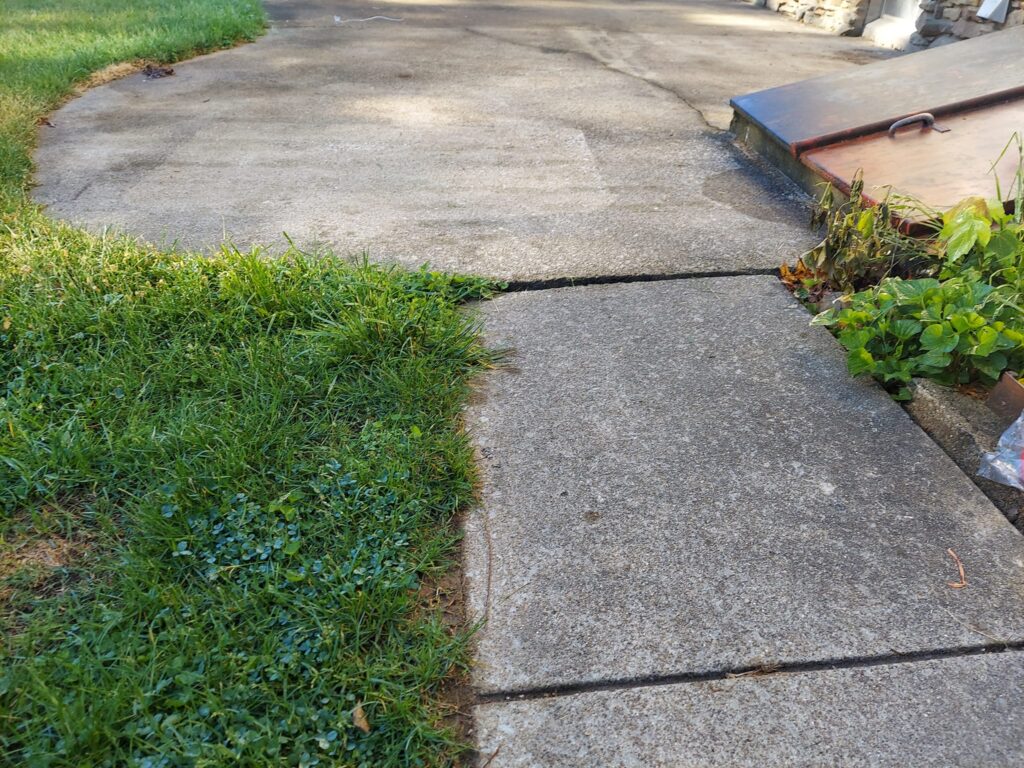
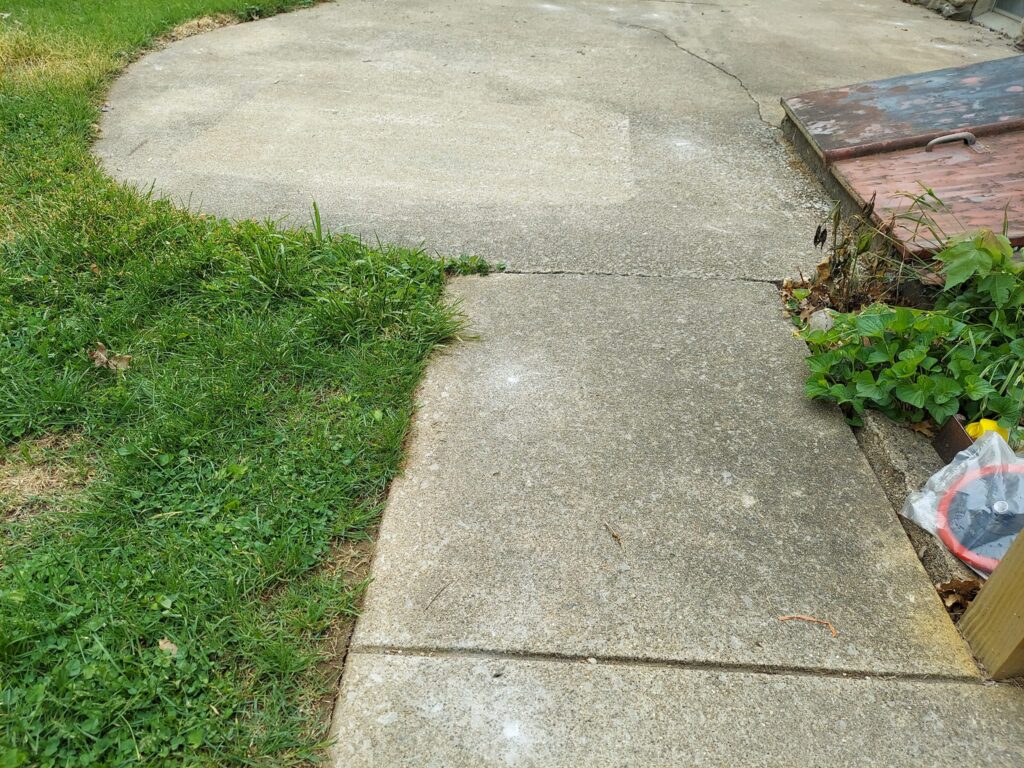
- Uneven Joints: If one slab has sunk lower than the adjacent one, creating a “toe-stubber.”
- Hollow Sounds: If your concrete sounds hollow when tapped, it indicates voids underneath that need filling before the slab cracks.
- Drainage Issues: If water pools on your walkway because the slope has shifted toward your foundation.
- Stabilization: If slabs rock or move when you walk on them.
When is it NOT the right fit?
If the concrete is pulverized, crumbling into gravel, or has extensive spiderweb cracking, lifting it won’t solve the structural failure. In these cases, replacement is usually the only option.
The Polyurethane Foam Injection Process
Understanding the process can alleviate any anxiety about the repair. Here is what you can expect when professionals arrive at your home:
- Assessment: The technicians evaluate the drainage, the condition of the concrete, and the cause of the settling. Get a free estimate in Indianapolis with EcoLift LLC.
- Drilling: Small, unobtrusive holes are drilled strategically through the concrete slab.
- Injection: A specialized gun injects the two-part polymer into the holes. The technicians monitor the lift in real-time to ensuring the slab rises evenly.
- Leveling: The injection continues until the slab aligns perfectly with the surrounding concrete.
- Cleanup: The holes are patched with a cement mixture that matches your existing concrete as closely as possible, and the site is swept clean.
Sidewalk Lifting Cost Guide
Every project is unique, but understanding the pricing model helps you budget accordingly. Most professional companies price polyurethane lifting based on the amount of foam material required to fill the voids and lift the slab, rather than just the square footage of the concrete.
Generally, you can expect costs to range between $5.00 and $25.00 per square foot of lifted area, depending on the depth of the void. While this is an estimate, it remains significantly cheaper than the $15 to $30+ per square foot often charged for removing and pouring new concrete.
Note: Always ask for a free, detailed quote. Reputable sidewalk lifting contractors will be transparent about how they calculate their fees.
DIY vs. Professional Sidewalk Leveling
In the age of internet tutorials, it is tempting to look for a DIY fix. You might see “canned foam” solutions at the hardware store, but proceeding with caution is advised.
The Risks of DIY
Consumer-grade foam lacks the density and compressive strength needed to support heavy concrete slabs. Furthermore, without hydraulic equipment and professional training, it is easy to “over-lift” a slab, causing it to crack or create a new high spot that is impossible to lower.
The Professional Advantage
Professionals use industrial-grade polymers designed specifically for load-bearing applications. They have the experience to control the expansion rate of the foam and ensure the slab is leveled within a fraction of an inch. Hiring a pro ensures the repair is done safely and correctly, often backed by a warranty that DIY methods cannot offer.
Frequently Asked Questions
How long does the repair last?
Polyurethane foam is built to last indefinitely. It does not decompose or break down in the soil. Barring significant new soil erosion issues (like a burst pipe washing away the earth deep below the foam), the repair often lasts for the lifespan of the concrete itself—potentially 20 years or more.
Is the material toxic?
No. While the liquid components are chemicals, once they react and cure (which happens in seconds), the resulting foam is chemically inert, non-toxic, and safe for the environment.
Will the injection holes be visible?
The holes are roughly the size of a dime. Once patched with cement, they blend in well with the existing concrete. Over time, as the patch weathers, they become even less noticeable.
Quick Recap:
- Fast: Walk on your sidewalk in minutes, not days.
- Affordable: Costs roughly half of concrete replacement.
- Durable: Hydrophobic foam resists water and won’t wash away.
- Clean: No heavy machinery or mess on your lawn.
- Smart: Saves your existing concrete from the landfill.
Restore Your Curb Appeal Today
Your home is likely your biggest investment, and maintaining its safety and appearance is crucial. Sunken sidewalks are more than just a cosmetic annoyance; they are a safety hazard waiting to happen.
Polyurethane foam injection offers a solution that makes sense for the modern homeowner. It is efficient, cost-effective, and provides a permanent fix to a shifting problem. Don’t let uneven concrete detract from your home’s beauty or safety any longer.
Contact us today for professional sidewalk leveling and lifting in Indianapolis, Indiana! Let’s get your walkways back on solid ground.
Related Post: Sidewalk Safety: Why Concrete Lifting is the Best Fix for Trip Hazards