
Winter weather might look beautiful, but the cold temperatures can leave a painful reminder on your property—damaged concrete. You step outside after a long winter only to find new cracks, pitting, or uneven slabs scattered across your driveway, patio, or parking lot.
This type of damage rarely happens overnight. It is usually the result of a subtle, recurring weather pattern known as the freeze-thaw cycle. When temperatures fluctuate above and below freezing, the concrete surfaces outside your home or business undergo immense physical stress.
Over time, these temperature shifts can compromise the structural integrity of your pavement. Knowing how this process works is the first step toward maintaining healthy, long-lasting concrete. This guide will explain the science behind freeze-thaw damage, how to spot the early warning signs, and what you can do to prevent and repair it.
The Science Behind Freeze-Thaw Damage
To properly care for your pavement, it helps to know exactly what happens to the materials when the temperature drops. The root cause of the problem actually starts with moisture.
How Water Infiltrates Concrete
Concrete might look completely solid, but it is actually a porous material. It contains microscopic voids and capillary networks formed during the mixing and curing process. Whenever it rains or snow melts, water easily seeps into these tiny pores, joints, and existing surface cracks.
Water to Ice: The Expansion Process
The real trouble begins when the temperature falls below freezing. As the trapped water turns into ice, it expands in volume by about 9%. This expansion generates immense hydrostatic pressure within the concrete’s internal structure. If this internal pressure exceeds the tensile strength of the cement matrix, the concrete begins to fracture from the inside out.
The Cycle’s Cumulative Effect
A single freeze might not cause visible harm. However, regions that experience cold winters frequently alternate between freezing and thawing temperatures. The ice melts back into water, penetrates deeper into the newly formed micro-cracks, and freezes again. This repeated cycle of stress and strain creates a cumulative effect, eventually leading to major, visible deterioration.
Visible Effects of Freeze-Thaw on Concrete Pavements
Because the damage starts internally, you might not notice a problem until it reaches the surface. Here is what freeze-thaw damage typically looks like once it becomes visible.
Spalling and Scaling
Scaling happens when the top layer of the concrete flakes or peels away, leaving a rough, pitted surface behind. Spalling is a more severe form of this, where larger chunks of concrete break off completely. Both issues are direct results of ice expanding near the surface of the pavement and pushing the top layer outward.
Cracking Patterns
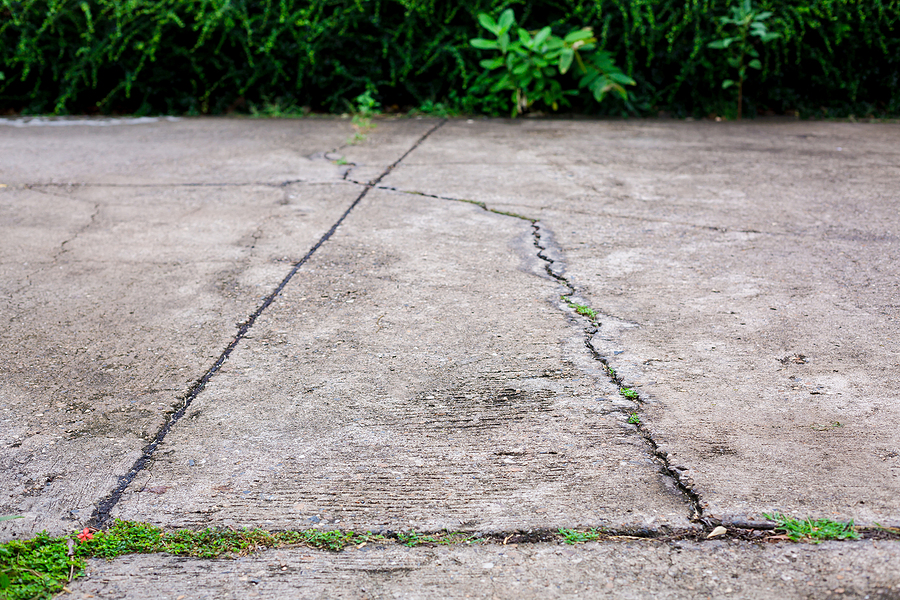
Repeated freezing and thawing often leads to specific cracking patterns. “D-cracking” is a common issue caused by the freeze-thaw deterioration of susceptible aggregate materials within the concrete. It forms a distinctive pattern of cracks running parallel to joints and edges. You might also notice map cracking, which is a network of fine, interconnected surface cracks that resemble a road map.
Potholes and Deterioration
If cracks and spalling are left untreated, they allow even more water to penetrate the slab. The continuous expansion and contraction will eventually break down the pavement entirely. This leads to large potholes and deep surface defects that pose serious tripping hazards and vehicle damage risks.
Loss of Structural Integrity
As the internal micro-cracks multiply, the overall pavement structure weakens. The concrete loses its load-bearing capacity, meaning it can no longer support the weight of heavy vehicles without further cracking. At this stage, the concrete may begin to sink or settle unevenly into the ground.
Factors Influencing Freeze-Thaw Susceptibility
Some concrete slabs last for decades without a single crack, while others crumble after a few winters. Several specific factors determine how well your pavement will hold up to the cold.
Concrete Quality and Mix Design
The original concrete mix plays a massive role in its durability. A lower water-cement ratio creates a denser, less porous concrete that is harder for water to penetrate. Additionally, the inclusion of air-entraining agents is vital. These chemical admixtures create microscopic air bubbles in the concrete, acting as pressure relief valves that give expanding ice room to grow without breaking the cement matrix.
Environmental Conditions
The climate dictates the severity of the threat. Areas like Indianapolis experience dozens of freeze-thaw cycles every single year. The presence of de-icing salts also makes matters worse, as they melt snow quickly, causing rapid water absorption just before the temperature drops and freezes the water again.
Pavement Design and Construction
A poorly constructed pavement will fail much faster in a cold climate. Proper subgrade preparation is required to prevent water from pooling beneath the slab. Effective joint design, secure joint sealing, and adequate curing practices all contribute to a stronger, more resilient concrete surface.
Preventing Freeze-Thaw Damage
You cannot control the weather, but you can take proactive steps to protect your concrete from its harsh effects.
Best Practices in Concrete Mix Design
If you are pouring new concrete, always specify an air-entrained mix. This is a non-negotiable requirement for exterior concrete in cold climates. Ensure the contractor uses a low water-cement ratio and high-quality aggregates that are not susceptible to D-cracking.
Proper Installation and Curing Techniques
The way concrete is finished and cured directly impacts its strength. Overworking the surface during finishing can push vital air bubbles out of the top layer, making it prone to scaling. Extending the curing period helps the concrete reach its maximum strength before it has to face its first winter.
Effective Drainage Systems
Keeping water away from your concrete is the most effective preventative measure. Ensure your property has a proper grading slope so water runs off the pavement naturally. Keep gutters clean and direct downspouts away from driveways and patios to prevent water from pooling on the surface.
Protective Sealants and Coatings
Applying a high-quality penetrating concrete sealant is a great way to reduce water absorption. These sealants fill the microscopic pores at the surface, creating a hydrophobic barrier that repels moisture and dissolved de-icing salts. Reapplying the sealant every few years will greatly extend the life of your pavement.
Repairing Freeze-Thaw Damaged Concrete
If winter weather has already taken a toll on your pavement, swift action can stop the damage from spreading further.
Identifying the Extent of Damage
Start with a thorough visual inspection of your property. Look for fine cracks, flaking surfaces, and uneven slabs. Minor surface issues can usually be repaired, but concrete that has lost its structural integrity may need to be entirely replaced.
Techniques for Crack Filling
Water will quickly fill any open cracks, so they must be sealed promptly. Use a high-quality, flexible concrete crack filler that can expand and contract with the temperature changes. Proper cleaning and preparation of the crack before application is vital for ensuring the filler bonds correctly.
Concrete Patching and Resurfacing
For areas suffering from scaling or spalling, concrete patching compounds can restore the surface. If the damage is widespread but the slab is structurally sound, a complete concrete resurfacing overlay can make the pavement look brand new while providing a fresh layer of protection.
Professional Lifting and Leveling Solutions
When freeze-thaw cycles compromise the soil beneath the slab, the concrete will sink and become uneven. Professional concrete lifting and leveling (often called slabjacking or polyurethane foam injection) can safely raise the sunken slabs back to their original position. This is much faster and more cost-effective than tearing out and replacing the concrete.
Frequently Asked Questions (FAQ)
How do de-icing salts impact concrete?
De-icing salts lower the freezing point of water, melting ice quickly. However, this creates a briny liquid that the concrete absorbs. When temperatures drop even further, this trapped brine freezes and expands, causing severe scaling and spalling on the concrete surface.
Can I repair spalled concrete myself?
Minor surface spalling can be repaired with DIY patching compounds. However, if the spalling is deep or widespread, it usually indicates a deeper structural issue. In these cases, it is highly recommended to consult a professional to ensure the repair lasts.
How often should I seal my concrete driveway?
For areas that experience frequent freezing weather, applying a penetrating concrete sealer every two to three years is a great rule of thumb. This maintains the protective barrier and keeps water from infiltrating the pores.
Protect Your Pavement Today
A damaged driveway or walkway is an unsightly hazard, but it is a condition you can fix. By taking care of your concrete today, you can stop the cycle of deterioration and enjoy a safe, pristine surface for years to come.
If you are dealing with sunken, cracked, or uneven pavement, we are here to help. Reach out to us for professional concrete lifting and leveling, as well as concrete crack filling services in Indianapolis. Schedule a free estimate today and let our experts restore your concrete before the next freeze hits.
Related Post: Fixing Pool Deck Cracks: The Role of Concrete Lifting in Poolside Safety