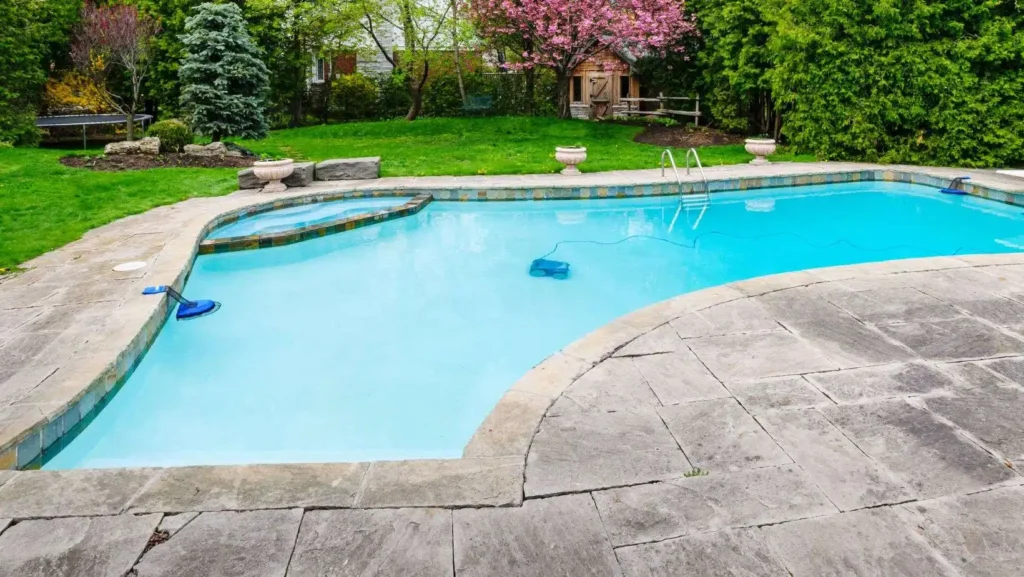
A pool deck should be the centerpiece of your backyard—a smooth, safe surface where family and friends gather during long Indiana summers. But when the concrete starts to sink, crack, or shift, that relaxing space quickly becomes a liability.
Sinking pool decks are more common than most homeowners realize. And while the damage can look minor at first, the underlying problem rarely stays that way. The good news? Full replacement is almost never the only option. Concrete leveling and lifting offers a faster, less expensive, and equally effective solution for most sinking pool decks—and it can often be assessed the very same day you call.
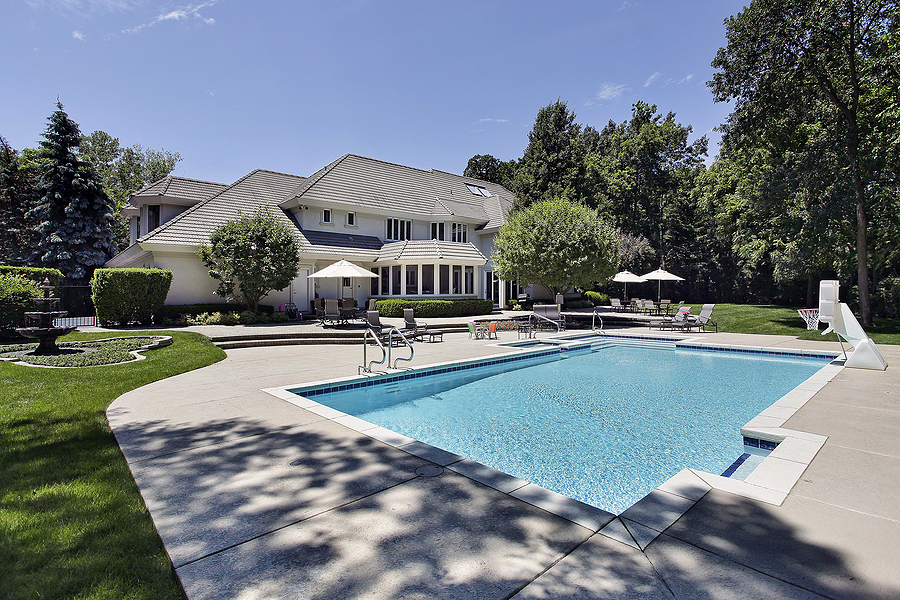
Why Do Pool Decks Sink and Settle?
Pool decks face a uniquely harsh set of conditions. They’re exposed to constant moisture, heavy foot traffic, shifting temperatures, and soil that was disturbed during the original pool excavation. The backfill soil added around a pool during construction is typically looser and less compacted than the surrounding ground—and over time, the weight of a concrete slab sitting on that unstable base causes sections to sink or shift.
Common Causes of Sinking Pool Deck Concrete
Several factors can accelerate or trigger settling in pool deck concrete:
- Poorly compacted soil beneath the slab, especially in newly constructed pools
- Erosion caused by water runoff washing soil away from under the concrete
- Freeze-thaw cycles that repeatedly expand and contract the ground beneath the slab
- Voids forming under the concrete as soil compresses or shifts
- Tree roots growing near or beneath the pool deck
- Poor drainage that allows water to pool and weaken the soil over time
Once soil support is compromised, the concrete has nowhere to go but down. And once settling begins, it rarely stops on its own.
The Real Dangers of an Uneven Pool Deck
An uneven pool deck is more than an eyesore. The raised edges and dips that form as concrete settles create genuine safety hazards—particularly in a space where people are frequently barefoot, moving quickly, or carrying equipment.
Children running between the pool and the yard are at particular risk. So are guests who aren’t familiar with where the concrete has shifted. Beyond the immediate trip-and-fall risk, uneven slabs also create drainage problems. Water that pools in low spots works its way beneath the concrete, accelerating the erosion that caused the problem in the first place. Left unaddressed, minor settlement can evolve into major structural damage—and significantly higher repair costs.
Ignoring a sinking pool deck also affects your property’s curb appeal and overall value. Cracked, tilted concrete sends the wrong message about the care and maintenance of your home.
The Benefits of Concrete Leveling and Lifting
When a pool deck sinks, many homeowners assume full replacement is the only fix. In most cases, that assumption costs them thousands of dollars they didn’t need to spend.
Enhanced Safety and Improved Aesthetics
Concrete leveling raises settled slabs back to their original position, eliminating the raised edges and low spots that create tripping hazards. The result is a smooth, level surface that restores both the safety and the appearance of your pool area—without the mess and disruption of demolition.
Significant Cost Savings Over Full Replacement
According to A-1 Concrete Leveling, concrete leveling typically saves homeowners 50 to 70 percent compared to full replacement. Pool deck leveling costs generally range from $1,350 to $5,940 depending on the method and the scope of the project—a fraction of what a full tear-out and repour would cost. Replacement also means days or weeks without access to your pool area, whereas leveling is usually completed in a matter of hours.
Protecting Your Long-Term Investment
Concrete leveling addresses the root of the problem—not just the surface damage. By filling the voids beneath the slab and stabilizing the soil, professional concrete leveling reduces the likelihood of future settling. You’re not just fixing what’s visible today; you’re protecting the concrete from continued deterioration.
How Pool Deck Concrete Leveling Works
There are two primary methods used to lift and level sunken pool deck concrete. Both involve injecting material beneath the settled slab to raise it back into place, but they differ in material, precision, and durability.
Polyurethane Foam Injection (Polyjacking)
Polyjacking uses a two-part expanding polyurethane foam injected through small holes drilled in the settled concrete. Once beneath the slab, the foam expands rapidly, filling voids and lifting the concrete with a high degree of precision. Technicians can level concrete to within small fractions of an inch.
Polyurethane foam is impervious to water and soil chemicals, meaning it won’t erode or break down over time. The injection holes are small—typically around 3/8 of an inch—minimizing visible disruption to the surface. Once cured, the foam provides lasting stability and soil support.
Mudjacking: The Traditional Approach
Mudjacking, the older and least recommended of the two methods, involves pumping a slurry of soil, sand, and water beneath the slab to push it upward. It’s generally the most affordable option, but it’s less precise than foam injection and the material can break down over time, leading to re-settling.
Which Method Is Right for Your Pool Deck?
The right method depends on the severity of the settlement, the condition of the concrete, and the size of the area being repaired. A professional assessment will identify which approach offers the best long-term outcome for your specific situation. In many cases, polyurethane foam is the preferred choice for pool decks due to its precision, durability, and resistance to moisture.
When to Call a Professional for Pool Deck Leveling
Warning Signs Your Pool Deck Needs Attention
Don’t wait until the damage is severe. If you notice any of the following, it’s worth having your pool deck inspected sooner rather than later:
- Uneven or tilted concrete slabs around the pool edge
- Cracks spreading across the deck surface
- Concrete sinking near the pool coping or waterline
- Water collecting in low spots after rain
- Gaps forming between the concrete and pool coping
- Raised edges that snag feet or create visible trip hazards
- A hollow sound when you walk on certain sections of the deck
Small cracks alone may not signal a structural problem, but sinking or uneven concrete almost always indicates that soil movement is occurring beneath the surface.
DIY vs. Professional Concrete Leveling
Concrete leveling is not a DIY project. The equipment required—foam injection systems, pressure rigs, and drilling tools—is commercial-grade, and the technique requires training to apply correctly. Under- or over-injecting material beneath a slab can cause additional damage. A professional evaluation will also determine whether pool deck leveling is the appropriate solution or whether sections of the concrete are too deteriorated to be lifted effectively.
Frequently Asked Questions About Pool Deck Leveling
How long does the leveling process take?
Most pool deck leveling projects are completed within a few hours. This is significantly faster than concrete replacement, which can take several days and requires additional time for curing before the area can be used again.
Is concrete leveling a permanent solution?
Polyurethane foam injection is considered a long-lasting, durable repair. Because the foam doesn’t erode or react with moisture or soil chemicals, it maintains its lifting and stabilizing properties over time. All concrete leveling methods, when paired with proper drainage and maintenance, can last for many years.
Will concrete leveling damage my landscaping?
No. Concrete leveling is minimally invasive by design. The injection holes are small, and there’s no need for heavy demolition equipment. Unlike full replacement, which typically disrupts the surrounding yard, leveling preserves your landscaping and pool surroundings.
Restore Your Pool Deck Before the Problem Gets Worse
A sinking pool deck rarely improves on its own. The longer settlement continues, the more water infiltrates, soil erodes, and cracks spread—turning a manageable repair into a costly one. Concrete leveling and lifting offers a proven, cost-effective way to restore your pool deck’s safety, function, and appearance without the expense or disruption of full replacement.
Serving residential and commercial properties throughout Indianapolis, Indiana, our team provides expert pool deck leveling using proven lifting methods. Contact us today to schedule your free pool deck leveling estimate and find out how quickly we can get your pool area back to its best.
Related Posts:
Fixing Pool Deck Cracks: The Role of Concrete Lifting in Poolside Safety
Repair Your Patio in Hours with Concrete Leveling
Stop the Spread: A Guide to Concrete Crack Filling and Joint Control