Signs You Need Concrete Driveway Leveling

Coming home to a smooth, intact driveway is something most homeowners take for granted. Over time, shifting earth and harsh weather can cause heavy slabs to sink, creating a bumpy and hazardous surface. Ignoring these early warning signs often leads to total driveway failure.

A cracked driveway is a structural issue that requires careful attention. Concrete acts as a rigid bridge over the soil beneath it. When that support system fails, the concrete bends and breaks under the stress of daily vehicle traffic.

Recognizing the symptoms of settling concrete early allows you to address the root cause before the damage becomes irreversible. By learning what to look for, you can save thousands of dollars, protect your vehicles, and preserve your property’s curb appeal.
What Causes Driveways to Sink or Become Uneven?

Concrete is incredibly heavy, and its stability relies entirely on the ground supporting it. When the earth beneath your driveway changes, the slab on top will inevitably follow.

Soil Erosion and Washouts

Water is the leading enemy of concrete foundations. Heavy rainfall or improper drainage can wash away the dirt directly underneath your driveway. This creates empty pockets, or voids, leaving the heavy concrete suspended in the air. Eventually, the weight of the slab causes it to collapse into the void, resulting in a sunken surface.

Poor Compaction During Installation

Before a driveway is poured, the underlying soil must be tightly compacted to provide a solid base. If a contractor rushes this step, the loose soil will naturally settle over time. As the earth compresses under the weight of the new concrete and parked vehicles, the slab will slowly sink into the ground.

Tree Roots and Ground Movement

Large trees planted near your driveway naturally seek out moisture, often extending their root systems directly under the concrete. As these roots grow and thicken, they exert immense pressure on the slab, pushing it upward and causing severe cracking. Additionally, regions that experience heavy freeze-and-thaw cycles face constant ground movement. Moisture in the soil expands when it freezes and contracts as it thaws, creating a cycle of disruption that destabilizes the concrete.

Visible Indicators: How to Spot an Uneven Driveway

Your driveway will usually communicate that it has a problem long before a complete structural failure occurs. You simply need to know what signs to look for.

Cracks and Trip Hazards

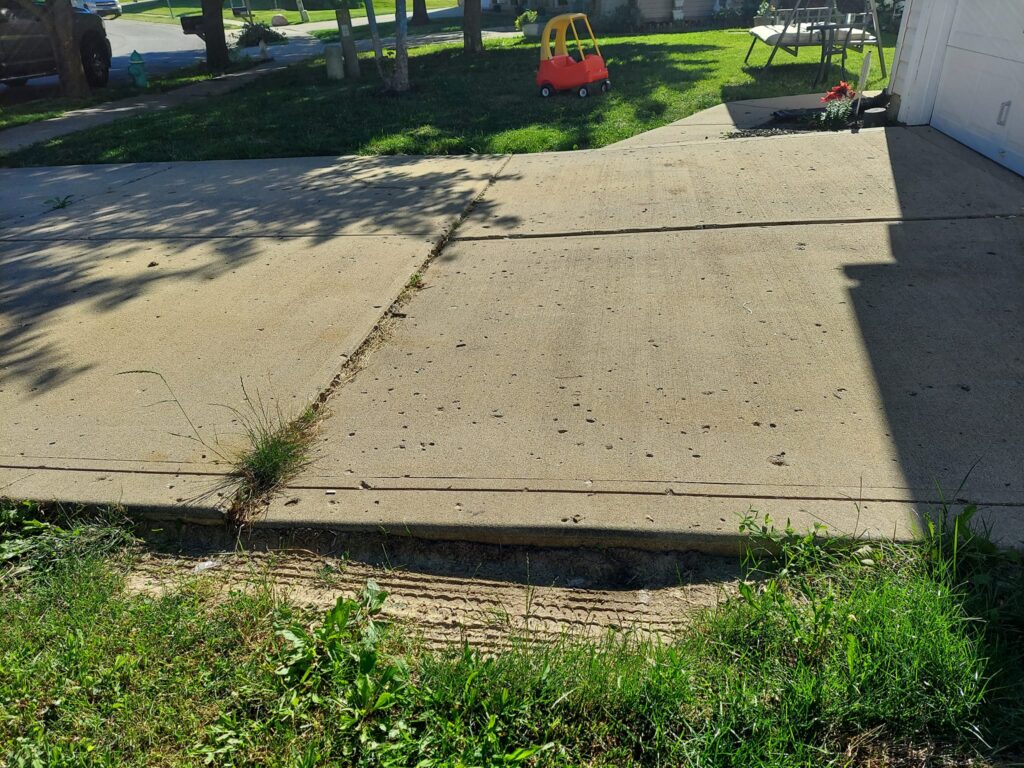
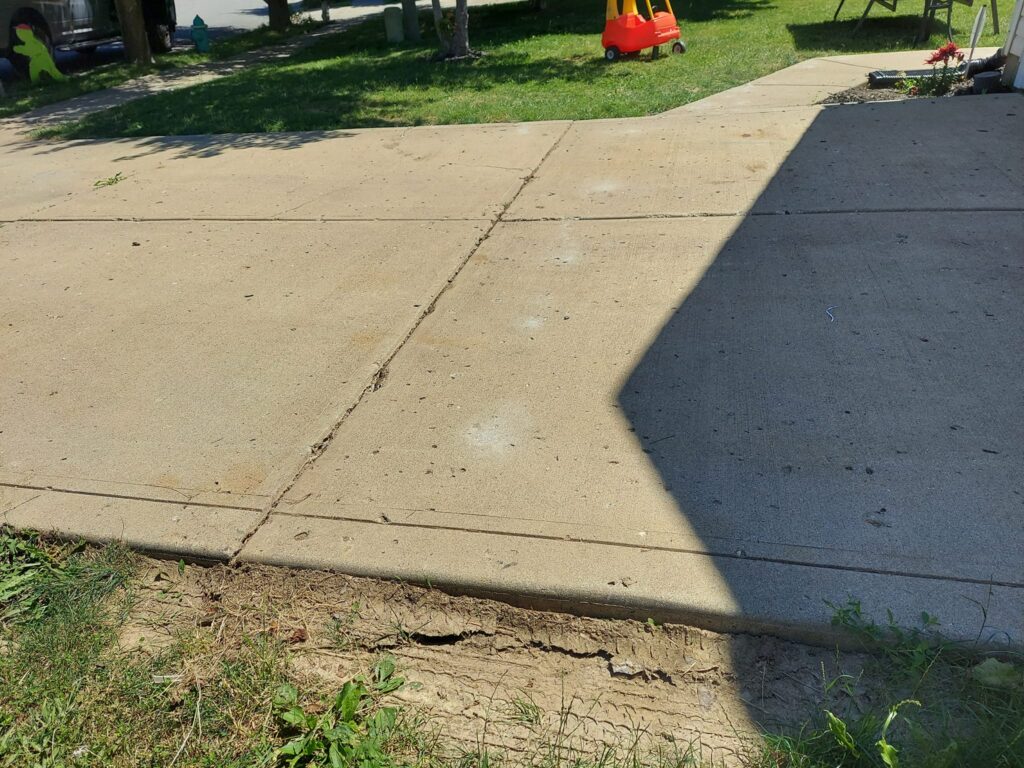
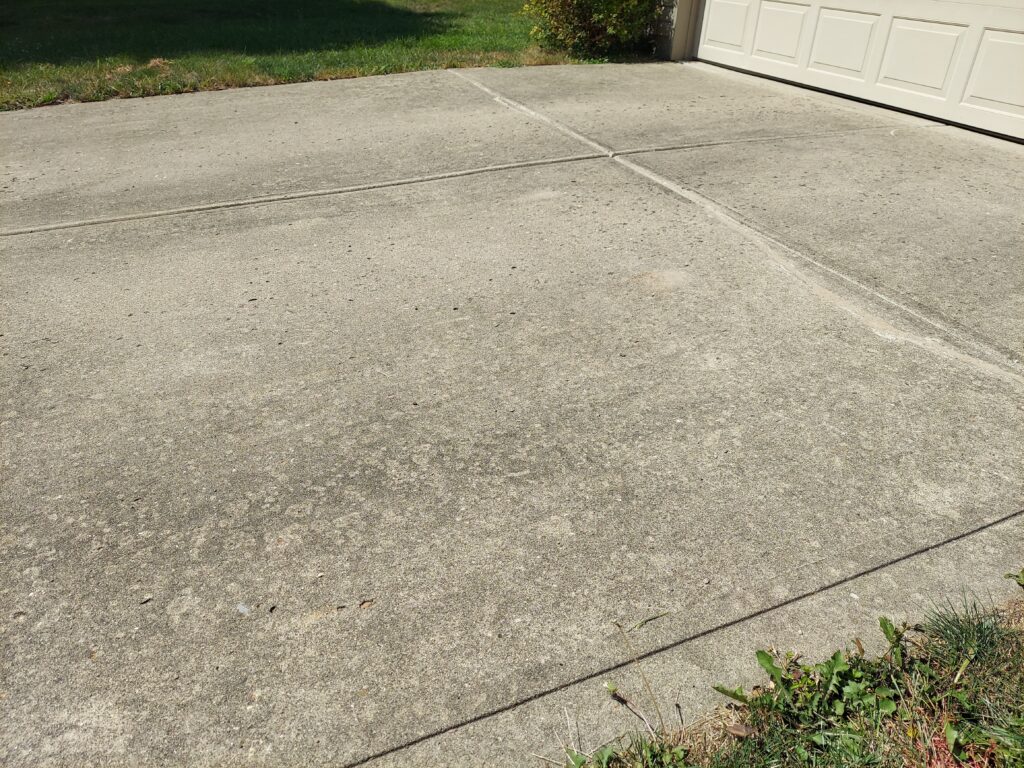
Hairline cracks are common in aging concrete, but widening gaps indicate a serious problem. If you notice cracks that are continually expanding or slabs that have shifted to create an uneven ledge, the concrete is actively settling. These sudden drops create immediate trip hazards for your family and guests.

Pooling Water and Drainage Issues

A properly installed driveway is graded to direct water away from your home. If you notice puddles forming in the middle of your slabs after a rainstorm, the concrete has likely sunken in that specific area. Standing water accelerates soil erosion, creating a cycle that will cause the driveway to sink even faster.

Gaps Between the Driveway and Your Home

Pay close attention to where your driveway meets your garage floor or foundation walls. The concrete should sit flush against the structure. If you see a noticeable gap forming between the driveway slab and your home, the earth beneath the driveway has compacted and the slab is pulling away.

Beyond Aesthetics: The Risks of an Uneven Driveway

An uneven surface is certainly an eyesore. However, the physical and financial risks associated with sinking concrete extend far beyond curb appeal.

Safety Concerns and Liability

Trip and fall accidents are a leading cause of residential injuries. An uneven slab creates a dangerous environment for children riding bikes, delivery drivers dropping off packages, and guests visiting your home. As a homeowner, you could be held liable for injuries sustained on your property due to poorly maintained concrete.

Vehicle Damage and Wear

Driving over a sharp concrete ledge every day takes a toll on your vehicle. The constant impact can throw off your car’s alignment, damage the suspension system, and cause premature wear on your tires. Fixing the driveway is often cheaper than paying for repeated automotive repairs.

Foundation Problems for Your Home

When concrete settles near your home, it alters the natural flow of water. Instead of draining away from your property, rainwater may begin pooling directly against your foundation. Over time, this constant moisture can seep into your basement or crawlspace, leading to mold growth and incredibly expensive structural repairs.

Benefits of Concrete Leveling

Tearing out an entire driveway and pouring new concrete is a messy, expensive, and time-consuming process. Fortunately, driveway leveling provides a highly effective alternative that addresses the root cause of the sinking slab.

Cost-Effectiveness vs. Replacement

Lifting existing concrete costs significantly less than tearing it out and replacing it. On average, homeowners find that concrete leveling is 50 to 70 percent less expensive than a full replacement. You retain your original concrete, avoiding the steep costs of demolition, disposal, and fresh materials.

Speed and Efficiency of the Process

Replacing a driveway takes several days of heavy labor, followed by a lengthy curing process where you cannot park on the surface. Concrete leveling is remarkably efficient. Most projects are completed in just a few hours. Because the materials cure rapidly, you can usually drive and park on your freshly leveled driveway the very same day.

Eco-Friendly Solutions

Modern concrete lifting relies on high-performance polyurethane foam rather than heavy cement slurries. This closed-cell foam is lightweight, weighing just a few pounds per cubic foot, meaning it will not overload the already struggling soil. Furthermore, industry-leading foams often consist of recycled and biobased materials. They resist water, will not degrade or leach chemicals into the ground, and save tons of concrete from ending up in local landfills.

The Concrete Leveling Process: What to Expect

Restoring your driveway is a straightforward procedure when handled by experienced professionals. The process is precise and designed to minimize disruption to your property.

Inspection and Assessment

A driveway leveling contractor will carefully examine your driveway to determine the extent of the settling. They will assess the underlying soil conditions, locate the hidden voids, and calculate the exact amount of lift required to restore the slab to its original position.

Drilling and Injection

To access the void, the technician drills strategically placed, small holes into the sunken slab. These holes are typically only 5/8 of an inch in diameter. Next, specialized equipment pumps the two-part polyurethane foam through the holes. A chemical reaction causes the foam to expand rapidly beneath the concrete, gently raising the slab back to a level state.

Curing and Cleanup

The polyurethane foam cures and hardens in a matter of minutes. Once the slab is level, the technician will carefully patch the small drill holes with a concrete mixture that closely matches your existing driveway. The work area is cleaned, and your driveway is immediately ready for normal use.

FAQ Section

How long does concrete leveling last?

When performed correctly, concrete leveling offers a permanent solution. Polyurethane foam is highly durable and does not wash away or break down over time. With proper routine maintenance, the repair can easily last 20 to 50 years, or the remaining lifespan of the concrete itself.

Is concrete leveling messy?

No. Unlike a full replacement that requires heavy excavation equipment and dusty demolition, leveling is a clean process. The equipment remains on a specialized truck, and only a single hose is run to the repair site. There is no damage to your surrounding landscaping or lawn.

Can I level my driveway myself?

Concrete leveling requires highly specialized equipment, precise material mixing, and an expert understanding of soil dynamics. Attempting to lift heavy concrete slabs without professional training can result in cracked concrete, property damage, and severe personal injury. It is a job strictly for trained professionals.

Restore Your Driveway’s Stability

A sinking driveway will not fix itself. Left untreated, the voids beneath your concrete will only grow larger, leading to wider cracks, dangerous trip hazards, and eventually, the need for a total replacement. By acting early, you can stabilize your soil, lift your concrete, and restore the safety of your home.

Protect your property value and eliminate dangerous trip hazards today. If you need professional driveway leveling and crack filling in Indianapolis, Indiana, book a free estimate today to get started on a permanent, cost-effective solution.

Call Now

Related Post: The Benefits of Concrete Driveway Lifting Explained
The Benefits of Concrete Driveway Lifting Explained
Walking out to your car in the morning shouldn’t feel like navigating an obstacle course. Yet, for many homeowners, uneven driveways and sinking sidewalks turn a simple path into a daily tripping hazard. Seeing cracks widen or slabs settle isn’t just frustrating; it’s often a source of anxiety about potential costs and property value.

Before you resign yourself to the noise and expense of a jackhammer tearing up your front yard, there is a less invasive solution worth exploring. Concrete driveway lifting—often called slab jacking or foam injection—offers a way to restore your concrete to its original level without the mess of total replacement. Understanding how this process works can save you time, money, and a significant amount of stress.

Why Concrete Driveways Sink: The Science Beneath the Slab

To fix the problem, you first need to understand what is happening underground. Concrete slabs are heavy, but they rely entirely on the soil beneath them for support. When that support system fails, the concrete has nowhere to go but down.

According to soil management experts, several factors contribute to this settlement:

  • Soil Compaction and Shrinkage: Often, the soil used to backfill a foundation or driveway during construction isn’t compacted perfectly. Over time—sometimes taking 5 to 10 years—this loose soil naturally settles and compresses, creating a gap between the earth and your concrete.
  • Erosion and Washout: Water is a powerful force. If your downspouts discharge near your driveway or if the grading is poor, rainwater can wash away the soil supporting your concrete.
  • Freeze-Thaw Cycles: In colder climates, moisture in the ground freezes and expands, pushing the slab up. When it thaws, the soil contracts, leaving voids. Over repeated cycles, this movement destabilizes the slab.
  • Burrowing Pests: Believe it or not, energetic moles or chipmunks tunneling under your walkway can displace enough soil to cause noticeable sinking.

Comparing Repair Methods: Replacement vs. Lifting

When faced with a sunken slab, the traditional instinct is often to “rip and replace.” This involves demolishing the old concrete, hauling away the debris, pouring new wet cement, and waiting days for it to cure. While sometimes necessary for severely damaged concrete, it is an incredibly disruptive and expensive process.

Concrete lifting takes a surgical approach. Instead of destroying the slab, contractors pump a material underneath it to fill the voids and hydraulically lift the concrete back into place.

Historically, this was done with “mudjacking,” which uses a mixture of sand, water, and cement. While effective, mudjacking requires drilling large holes (typically 2 to 3 inches in diameter) and adds significant weight to already compromised soil.

Modern concrete lifting typically uses polyurethane foam injection. This high-density expanding foam offers distinct advantages over both replacement and traditional mudjacking.

The Benefits of Driveway Lifting

Choosing to lift your driveway rather than replace it offers several compelling advantages that go beyond just aesthetics.

Cost-Effectiveness

For most homeowners, the budget is the deciding factor. Concrete lifting is significantly more affordable than replacement. Industry data suggests that lifting costs can be 30% to 50% less than removing and pouring a new slab. You are paying for a repair process rather than the labor-intensive removal of old material and the purchase of new concrete.

Speed and Convenience

Time is often just as valuable as money. Replacing a driveway can put it out of commission for several days while the new concrete cures and hardens. In contrast, polyurethane lifting is incredibly fast.

According to pavement preservation guides from the Federal Highway Administration, polyurethane materials cure rapidly, often allowing traffic back on the surface in as little as 15 to 30 minutes after injection. You can literally lift your driveway in the morning and park your car on it by lunch.

Environmentally Friendly

Concrete manufacturing is energy-intensive, and demolished concrete adds tons of waste to landfills. By salvaging your existing concrete, you reduce your environmental footprint. Furthermore, modern polyurethane foams are chemically inert once cured, meaning they won’t leach harmful chemicals into the soil or groundwater.

Long-Lasting Solution

Unlike the heavy grout used in mudjacking, polyurethane foam is lightweight. This is crucial because adding heavy material to soil that has already failed can sometimes cause further settling. Polyurethane is also hydrophobic, meaning it resists water and won’t wash away or erode over time, providing a stable, long-term fix.

Request a Free Driveway Lifting Estimate in Indy Now

The Driveway Leveling Process: A Step-by-Step Guide

The process of driveway leveling is fascinatingly simple in concept but requires professional precision to execute correctly. Here is what you can expect when a crew arrives at your home:

1. Profiling and Drilling

First, the technicians analyze which areas of the concrete have settled. They then drill small injection holes through the slab. Unlike the large holes required for mudjacking, polyurethane injection uses holes that are only about 5/8 of an inch (16mm) in diameter—roughly the size of a penny.

2. Injection

A specialized gun injects a two-part polymer into the holes. This material is a liquid when it enters the ground, allowing it to flow easily into the deepest voids and crevices beneath the concrete.

3. Expansion and Lift

Within seconds, the liquid reacts and expands into a high-density foam. This expansion fills the voids and, as it hardens, exerts upward pressure on the slab. The technicians carefully monitor the lift, raising the concrete incrementally until it is level with the surrounding area.

4. Cleanup and Patching

Once the slab is level and the foam has cured, the small injection holes are patched with cement. Because the holes are so small, the patches are usually inconspicuous, leaving you with a smooth, safe surface.

When to Consider Concrete Lifting Service

Not every concrete problem can be solved with lifting. If your concrete is crumbled, pulverized, or has a spiderweb of deep cracks, replacement might be the only viable option. However, professional concrete lifting is the ideal solution if:

  • The slab is mostly intact but has sunk on one side.
  • You have distinct “trip hazards” where two sections of sidewalk meet unevenly.
  • Water pools in low spots on your patio or driveway.
  • Your steps have pulled away from the foundation of your house.

Finding a Reliable Concrete Lifting Contractor

Since this process requires specialized equipment and expertise, it is important to hire a professional. Look for a contractor who specializes in polyurethane injection specifically. Ask about their warranty—reputable companies often guarantee their work for several years against re-settling. Check reviews to ensure they have a history of respecting homeowners’ property and cleaning up thoroughly after the job.

Conclusion

Your home is likely your biggest investment, and maintaining its exterior is part of protecting that value. A sunken driveway isn’t just an eyesore; it’s a liability waiting to happen. By addressing settlement early through concrete lifting, you prevent further damage to your home’s foundation and eliminate dangerous tripping hazards. It is a smart, efficient way to restore safety and curb appeal without turning your life upside down.

If you are noticing uneven slabs around your home, don’t wait for the problem to get worse. Contact Us Today to get a free estimate for concrete lifting in Indianapolis and reclaim your driveway.

Call Now for a Quote

Related Post: How Concrete Leveling Can Save Your Sunken Driveway

How Concrete Leveling Can Save Your Sunken Driveway

Do you find yourself dodging bumps and dips every time you pull into your driveway? Sunken concrete isn’t just an inconvenience; it’s a problem that can pose safety risks, impact your home’s curb appeal, and potentially lower property value. The good news? You don’t have to shell out a fortune to replace your driveway entirely. Concrete leveling offers a fast, cost-effective solution to restore your driveway’s surface and eliminate those hazardous irregularities.

By the end of this guide, you’ll understand what causes driveway sinking, the advantages of concrete leveling over replacement, and how the process works. You’ll also get answers to common questions and tips on how to achieve long-lasting results. If your driveway is sinking, keep reading to learn why concrete leveling might be the best move you’ll make this year.

Call 317-777-4973 for Professional Concrete Driveway Leveling & Lifting in Indianapolis

Common Causes of Sunken Driveways

To fix a problem, you first need to understand it. Sunken driveways are typically caused by underlying issues beneath the concrete slab. Here are the most common culprits:

1. Soil Erosion

Over time, water can wash away the soil or gravel under your driveway. Poor drainage systems or heavy rains in certain regions can accelerate this erosion, leaving parts of your driveway unsupported.

2. Poor Compaction

If the soil beneath the driveway wasn’t properly compacted during installation, it can settle unevenly, causing the concrete above it to sink in places.

3. Tree Roots

Tree roots can grow beneath your driveway slab, pushing it upward in some areas while displacing soil in others. This combination creates uneven surfaces.

4. Freeze-Thaw Cycles

Regions prone to freezing winters, such as the Midwest, experience soil expansion and contraction due to freeze-thaw cycles. These movements can shift the concrete slab, leading to settlement over time.

Knowing the cause of your driveway’s sinking can help you prevent the issue from worsening and inform the best repair method.

The Problems with a Sunken Driveway

Ignoring sinking concrete can lead to a variety of issues—for you, your home, and even your visitors.

Safety Hazards

Uneven surfaces can create tripping risks, especially for children and older adults. Additionally, dips in the driveway can damage your car’s undercarriage if not navigated carefully.

Aesthetic Concerns

Your driveway is one of the first things people notice about your property. Sunken concrete makes your home look neglected, detracting from its curb appeal.

Property Value Impact

Potential buyers might see a sunken driveway as a sign of larger foundational problems. Addressing it can maintain or even improve your home’s resale value.

View Our Sunken Driveway Leveling Solutions! 📐

Concrete Leveling vs. Replacement

When repairing a sunken driveway, you’re faced with two main options: concrete leveling or full replacement. Here’s how they compare:

Concrete Leveling

Pros:

  • Cost-effective, typically costing $5–$25 per square foot depending on the method, with polyurethane foam injections being a common choice.
  • Quick process; most jobs are completed in a single day.
  • Minimal disruption to landscaping or surrounding areas.

Cons:

  • Not suitable for concrete with severe cracks or extensive damage.

Concrete Replacement

Pros:

  • Provides a brand-new surface.

Cons:

  • Much more expensive than leveling.
  • Time-intensive, with curing periods of up to 28 days before use.
  • Greater environmental impact due to demolition and concrete production.

For most homeowners, concrete leveling is the more practical option unless the damage is beyond repair.

The Concrete Leveling Process

Wondering how concrete leveling works? Here’s a step-by-step look:

Step 1. Assessment – A professional evaluates the sunken area and determines the extent of the issue and the most suitable method (e.g., mudjacking or polyurethane foam injections).

Step 2. Drilling – Small holes are drilled into the affected concrete slab. These holes allow for the injection of leveling material.

Step 3. Injection – A lifting material, such as polyurethane foam, is injected through the drilled holes. This material expands, lifting the slab back to its original level.

Step 4. Sealing – Once the concrete is leveled, the holes are sealed, leaving the surface smooth and functional again.

Step 5. Cleanup – The site is cleaned up, and you can typically drive on the surface within 24 hours (or even sooner).

Benefits of Concrete Leveling

Why choose concrete leveling for your sunken driveway? Here are the key benefits:

  • Cost Savings – With concrete leveling costing significantly less than replacement, it’s a smart financial choice.
  • Fast Turnaround – Most concrete leveling projects are completed in a single day, meaning minimal disruption to your daily life.
  • Sustainability – By lifting your existing concrete, you reduce the waste associated with tearing out and replacing a slab.
  • Long-Lasting Results – Polyurethane foam injections are durable and resistant to changing weather conditions, ensuring your leveled driveway lasts for years.

FAQs

How long does concrete leveling last?

It can last 10–20 years or longer, depending on factors like soil stability and climate.

Is concrete leveling a permanent solution?

While it’s highly durable, periodic maintenance may be needed in areas with extreme soil or weather conditions.

What types of concrete damage can be fixed with leveling?

Concrete leveling can address uneven slabs, minor cracks, and sinking caused by soil compaction or erosion.

How soon can I drive on my driveway after leveling?

With polyurethane foam injections, you can typically drive on your driveway within hours of completion.

What is the difference between mudjacking and polyurethane foam injection?

Mudjacking uses a mixture of cement and soil, while polyurethane foam is lighter, more durable, and quicker to cure.

Take Action Today and Restore Your Driveway

A sunken driveway doesn’t just look bad—it can also create safety hazards, such as tripping risks, and negatively affect your property’s curb appeal and value. Over time, soil erosion, settling, or poor installation can cause the concrete to sink or become uneven.

Fortunately, concrete leveling provides a quick, cost-effective, and environmentally friendly solution to restore your driveway’s surface. By lifting and leveling the existing concrete, this process eliminates the need for a full replacement, saving you time, money, and the hassle of major construction.

From fixing minor dips to leveling large sunken areas, our team has the skills and experience to help. Don’t wait until the problem worsens. Book a consultation with EcoLift Concrete Leveling LLC today and keep your driveway safe, functional, and visually appealing.

Book Your Free Assessment Now

Related Post: Top 5 Signs Your Concrete Needs Leveling or Lifting